
Sea Transport Services: Power of Global Connection
Sea transport has become an indispensable part of the global Logistics system, plays an important role in connecting the markets and moving the goods around the world. In addition, the requirements for quality of shipping services are also very high, requiring timely, safe delivery, competitive international sea freight rates, and compensation for damages when the goods are damaged, as caused by the transportation, etc.
1. What is the sea transportation?
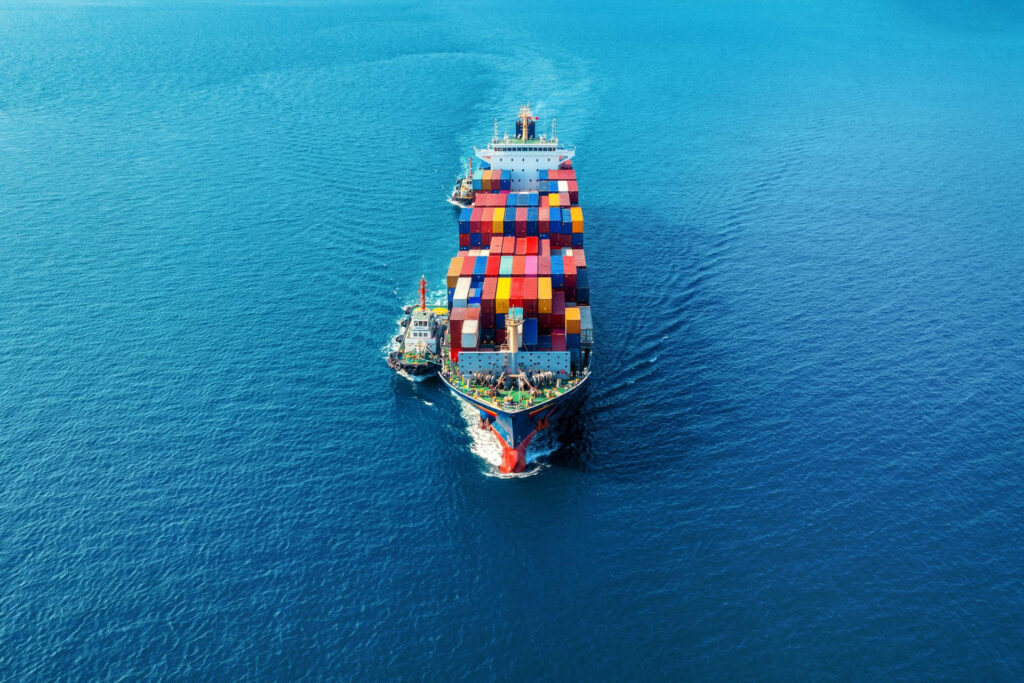
The sea transportation is the process of moving goods from one point to another on ships or vessels across bodies of water, oceans, or rivers. This is an important mode of transportation in the field of Logistics and international trade. During this process, the goods are packaged and loaded onto ships, then transported across oceans and seas to their final destination, usually seaports.
The sea transportation can be used for a wide variety of goods, from general consumer goods to industrial goods and dangerous goods. It is a cost-effective means of transport for high-volume or non-rush goods and is commonly used in international supply chains.
2. Advantages and disadvantages of sea transportation
2.1. Advantages of sea transportation
- Lower Costs: Sea transportation often costs less than other means of transportation such as air or rail, especially for large volumes of goods.
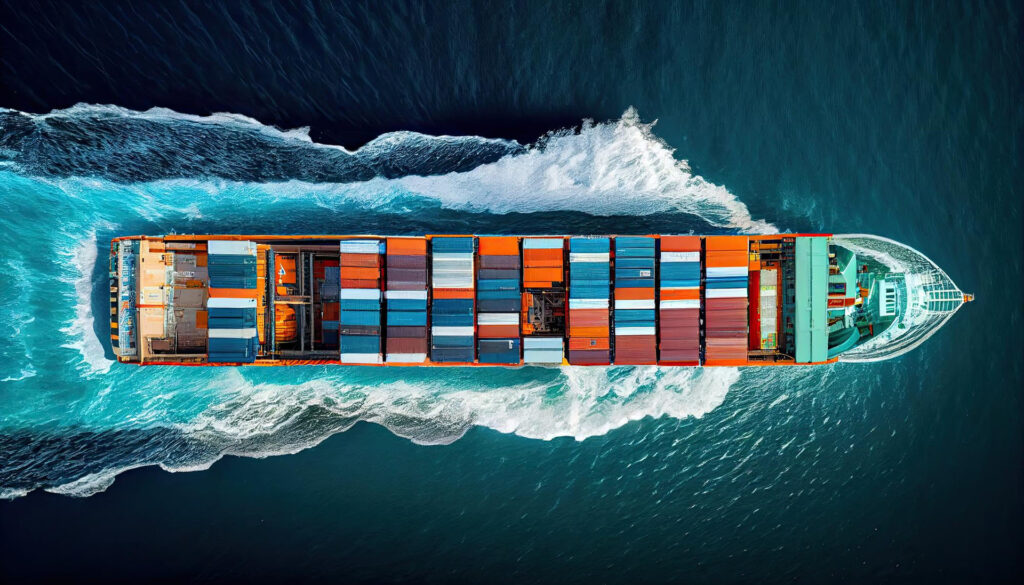
- Large Transport Capacity: Ships are capable of transporting large amounts of goods, helping to optimize the transport process and minimize the number of necessary transport trips.
- Flexibility in Time: Although sea transporation time can be longer than other means, for goods that are not urgent, this is usually not too important. Plus, the sea transporation typically operates 24/7, providing the flexibility for shipping schedules.
- Safety and Stability: Ships often ensure the safety and stability during transportation, especially for sensitive or perishable goods.
- Opportunities to Access International Markets: Sea transportation provides the opportunities to access international markets and expand the business scope of enterprises, helping them take advantage of the benefits of global trade.
2.2. Disadvantages of sea transportation
- Long Transit Time: Sea transportation time i often very long, especially when compared to other means of transportation such as airway or railway.
- Delivery cannot be made on land, so it will need to be combined with other modes of transport.
- Potentially Affected by Weather and Rough Seas: Ships can be affected by bad weather and rough seas, leading to delays.
- Transportation time is long and time-consuming, cannot transport high-value goods that require quick delivery time.
From the above advantages and disadvantages, the customers and enterprises can consider international freight shipping services by seaway when:
- Sea transportation is suitable for transporting goods for international trade.
- Sea transportation is suitable for transporting goods with large volumes and long distances but does not require a quick delivery time from the freight company.
3. TGI TRANS’s international sea freight service
3.1. TGI TRANS’s international sea freight routes
Southeast Asia route: China – Vietnam, Singapore, Thailand, Indonesia, Malaysia, Philippines, …
- Asia route: China, Korea, Japan, Taiwan,…
- Oceania route: Australia, New Zealand,…
- South Asia route: India, Pakistan, Dubai, UAE,…
- European route: England, France, Germany, Spain, Denmark, Sweden, Italy, Russian Federation,…
- North & South America route: USA, Canada, Brazil, Peru, Chile,…
- Africa route: South Africa, Mozambique, Egypt, Rwanda,..
3.2. Process of sea transportation through TGI TRANS
Below is TGI TRANS’s process of sea transportation:
Step 1: Receive the request from customer
Step 2: Check prices and ship schedules in available data
The carrier continues to check prices and ship schedules in available data, then notifies the customer.
Step 3: Receive booking from line and send to the customer
If the customer agrees with the shipping price and advised ship schedule, the carrier will take the booking from the line and send it to the customer.
Step 4: Remind the customer to load and unload cargo containers before closing time
Step 5: Prepare the customs declaration documents
To be able to proceed with the customs declaration, the customer/enterprise must fully prepare the following documents:
- 2 original customs declarations (1 copy for the exporter, 1 copy for the customs authority).
- 1 copy of the sales contract.
- 1 copy of the exporter’s introduction letter.
- 1 Copy of business registration certificate with original for comparing (if the enterprise is exporting for the first time).
Step 6: Customs clearance of exported goods
The customs network system automatically notifies the application receipt number, declaration number and appropriate goods routing:
Green stream
Exempted from checking detailed documents and actual goods. Instead, the customs officers transfer documents to the sub-department leaders for approval and customs clearance sealing (customs procedures as completed) on the export declaration.
Yellow stream
Exempt from physical inspection of goods. Instead, the documents are transferred to the tax calculation department for detailed inspection. If valid, the documents will continue to be transferred to the sub-department leader for approval and customs clearance sealing (customs procedures as completed) on the export declaration.
Red stream
The documents are transferred to the goods inspection department. Here, depending on the inspection rate of the sub-department’s leaders, the goods owners can present from 5%, 10% – 100% of goods for customs inspection.
Step 7: Issue the bill of lading
Based on the customer’s request, the carrier or shipping line will issue a bill of lading to the exporter.
Step 8: Send documents to the partner
Step 9: Prepare accounting documents and save the file
3.3 Sea transportation methods provided by TGI TRANS
► Less than Container Load (LCL): If you and your enterprise have a small volume of goods, they will be combined with other shippers in the same container with the same conditions of time and shipping route.
► Full Container Load (FCL): You have a quantity of goods large enough to fit in the same container or multiple containers.
► Bulk cargo: If your goods have the characteristics of unpackaged goods (agricultural products such as rice, corn, soybeans,… or minerals such as: coal, crushed stone, ore, …) or very large machinery and structural components, exceeding the limited capacity of the container.
4. Why should you choose TGI TRANS’s sea transportation service?
- Competitive and reasonable freight rates: Thanks to cooperative relationships with many large carriers, sea freight rates at TGI TRANS are extremely competitive and reasonable, contributing to optimizing costs for the enterprises.
- Professional transportation process: TGI TRANS staff will always monitor regularly and fully update order status to give the customers more peace of mind.
- Fast and flexible operating time: Thanks to the operating system and extensive links, TGI TRANS ensures fast, appropriate, flexible and responsive transportation time to meet the customers’ schedules.
- Extensive network system: With a network system, the partners and contacts spanning the world, TGI TRANS is ready to handle your problems both inside and outside of Vietnam.
- Professional staff: With a team of leading experts, knowledgeable about customs regulations in each country, TGI TRANS will help your enterprise prepare complete, accurate and quick documents and procedures.
Above are the shares about the international sea freight service that TGI TRANS shares with you. We hope to support and accompany you on each of our shipments.